Esports, or electronic sports, has emerged as one of the most influential forms of entertainment in the modern world. What started as casual gameplay among friends has evolved into a structured global industry with professional players, massive tournaments, sponsorship deals, and millions of viewers worldwide. Esports has transformed the landscape of gaming, redefining competition, entertainment, and social interaction in the digital era.
In this blog, we explore the origins of esports, the development of professional leagues, its cultural and economic significance, the lifestyle of players, and the future of this rapidly expanding industry.
The Early Days of Competitive Gaming
The concept of competitive gaming can be traced back to the late 1970s and early 1980s. Arcade games like Space Invaders, Pac-Man, and Donkey Kong were the first platforms where players competed for high scores. These early competitions were often informal, held in local arcades where players tested their skills and sought recognition. Leaderboards became a symbol of status, motivating players to practice and improve.
The 1990s marked a significant shift with the advent of multiplayer PC games. Titles such as Quake, StarCraft, and Counter-Strike introduced organized competitions, establishing the foundations of professional esports. South Korea became a central hub for competitive gaming, particularly with StarCraft, where televised tournaments attracted large audiences and professional players became national celebrities.
These early competitions laid the groundwork for modern esports by establishing key elements such as team-based strategy, individual skill, and audience engagement. Even at this stage, the core principles of esports—skill, strategy, and competition—were clearly emerging.
The Evolution of Esports in the 2000s
The 2000s brought a revolution in competitive gaming, fueled by the rise of high-speed internet and multiplayer online platforms. Broadband connectivity allowed gamers to compete with others across the globe in real time, fostering international communities. Multiplayer online games created the perfect environment for competitive play, enabling players to form teams, participate in leagues, and enter tournaments regardless of location.
Streaming technology fundamentally changed esports by making it spectator-friendly. Platforms dedicated to broadcasting gameplay allowed fans to watch live matches, analyze strategies, and interact with other viewers. Popular games such as League of Legends, Dota 2, and Overwatch established structured leagues, competitive seasons, and international tournaments, bringing esports into mainstream consciousness.
By the end of the decade, esports had developed into a legitimate industry. Professional players were recognized for their skills, tournaments offered substantial prize pools, and the audience for competitive gaming had expanded globally. This period marked the transition of esports from hobbyist competition to a professional, spectator-driven enterprise.
The Structure of Professional Esports
Professional esports is highly organized, resembling traditional sports in its structure. Players are typically members of professional teams that provide coaching, strategic guidance, and logistical support. Teams handle sponsorships, travel arrangements, marketing, and overall management, allowing players to focus entirely on improving performance.
In team-based games like League of Legends, players occupy specific roles such as top lane, jungle, mid lane, support, and marksman. Each role requires distinct skills and contributes to the overall strategy of the team. First-person shooter games like Counter-Strike: Global Offensive rely on roles such as entry fragger, sniper, and in-game leader, emphasizing coordination, precision, and quick decision-making.
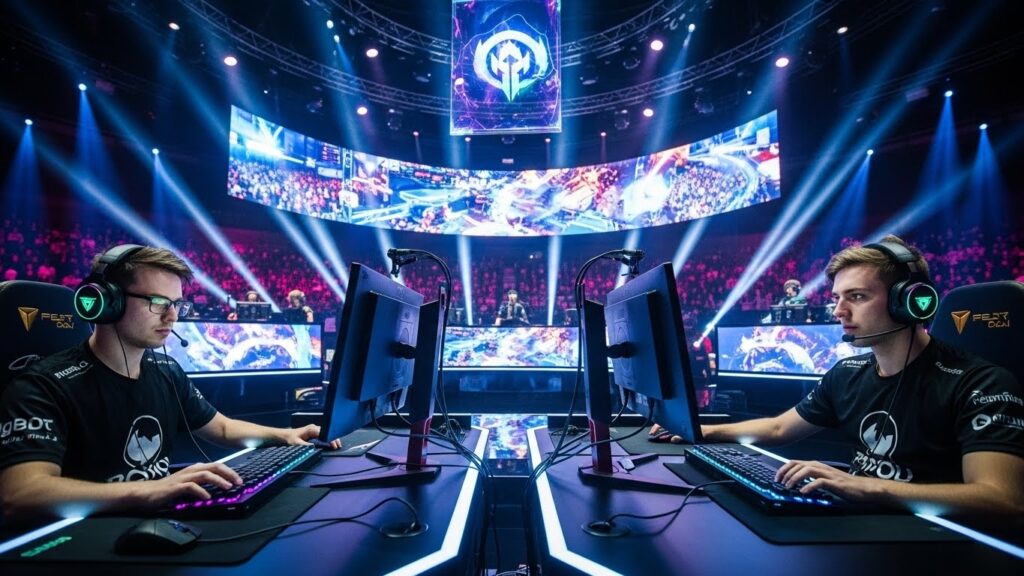
Professional players follow strict routines. Training can take six to ten hours a day, including individual practice, team scrimmages, strategy analysis, and studying opponents. Physical and mental fitness is also emphasized, as maintaining reflexes, focus, and endurance is essential to compete at the highest levels.
Major Global Esports Tournaments
Esports tournaments have grown in scale, prestige, and popularity over the years. Some of the largest tournaments rival traditional sports events in prize money, audience reach, and production quality.
The Dota 2 International is one of the most lucrative esports competitions, with prize pools surpassing thirty million dollars. The League of Legends World Championship draws millions of viewers worldwide, combining stadium events with online broadcasts. Other notable tournaments include the Overwatch League, Fortnite World Cup, Call of Duty League, and CS:GO Majors, each attracting dedicated fan bases and international attention.
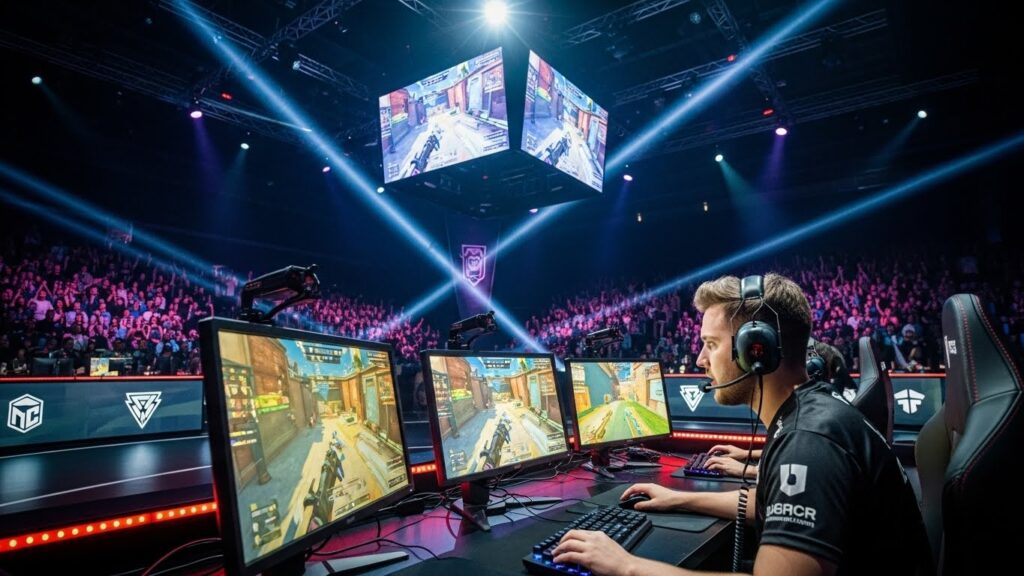
These tournaments are not just about gameplay—they are cultural phenomena. Spectators gather in arenas, engage in online discussions, and celebrate their favorite players and teams. The production value is comparable to major sporting events, with live commentary, cinematic intros, and interactive fan experiences. The combination of skill, strategy, and spectacle makes these tournaments compelling for both players and viewers.
Esports as a Spectator Experience
What sets esports apart is its dual role as both a participatory and spectator sport. Fans are not passive observers—they analyze strategies, discuss gameplay, and actively engage with the community. Unlike traditional sports, esports provides interactive features through live chats, voting, and social media integration, allowing fans to feel part of the event.
Streaming platforms play a pivotal role in the spectator experience. Services like Twitch and YouTube Gaming allow viewers to watch matches live, replay highlights, and interact with streamers and commentators. Analysts provide in-depth breakdowns of strategies, offer predictions, and explain high-level gameplay, enhancing the educational and entertainment value of esports broadcasts.
Fantasy leagues, online betting, and community tournaments further increase viewer engagement, creating a participatory culture that fosters loyalty and excitement among fans.
The Business of Esports
Esports has grown into a multi-billion-dollar industry with multiple revenue streams. Sponsorships, advertising, merchandise, media rights, ticket sales, and in-game purchases all contribute to the financial ecosystem. Major global brands recognize the marketing potential of esports, targeting younger audiences who are increasingly disengaged from traditional media.
Professional teams have become brands in themselves. Players receive salaries, sponsorship deals, and endorsements, while teams generate income from merchandise sales and media appearances. Event organizers invest in production, venue setup, and broadcast quality to attract viewers and sponsors, creating a sustainable and profitable industry.
The economics of esports are continually evolving. Streaming platforms, online advertising, and digital content monetization ensure that the industry can continue to grow while offering new opportunities for players, creators, and investors.
Cultural Impact of Esports
Esports has had a profound cultural impact, particularly among younger generations. It has created global communities where fans share strategies, celebrate victories, and build lasting friendships. Esports fosters collaboration, communication, and creativity, connecting people across geographic and cultural boundaries.
Esports challenges traditional definitions of sports. It demonstrates that skill, strategy, and teamwork are not limited to physical activity. Digital competition is increasingly recognized as a legitimate form of athletic performance, with players achieving celebrity status comparable to traditional athletes.
The influence of esports extends into fashion, media, and entertainment. Professional players and streamers shape trends in gaming peripherals, clothing, and lifestyle, while collaborations between games, music, and media further integrate esports into popular culture.
Training, Discipline, and Mental Health
Professional esports requires discipline, focus, and dedication. Players follow structured schedules that include in-game practice, team scrimmages, analysis of opponents, and personal skill development. Reflexes, accuracy, and decision-making are honed through repetitive practice, while strategic planning and teamwork are critical for success.
Mental health is a growing concern in esports. The pressure to perform, long hours of practice, and public scrutiny can lead to burnout, stress, and anxiety. Organizations are increasingly investing in mental health resources, counseling, and wellness programs to ensure sustainable performance for their players.
Physical health is equally important. Maintaining fitness improves reaction time, focus, and overall well-being. Many esports teams incorporate exercise routines, ergonomic setups, and healthy diets to optimize player performance and longevity.
Technology and Esports
Esports is inseparable from technology. High-performance computers, gaming peripherals, low-latency internet connections, and streaming software are essential for professional play. Players rely on precise equipment to maximize accuracy, speed, and responsiveness.
Streaming technology enables fans to experience competitions in real-time. Professional broadcasts often include commentary, player cams, analytics overlays, and interactive features. Advanced software allows teams to track performance metrics, analyze opponents, and refine strategies. Emerging technologies such as virtual reality and augmented reality promise to transform esports, creating immersive experiences for both players and spectators.
Technology drives innovation in esports, enabling new formats, platforms, and ways for fans to engage with the industry. It also facilitates the global growth of competitive gaming, connecting players and audiences worldwide.
Education and Career Opportunities
Esports has created new career paths and educational opportunities. Beyond professional players, there are roles in coaching, broadcasting, event management, marketing, analytics, and game development.
Several universities and institutions now offer esports programs that combine gaming skills with business, media, and technology education. Students can pursue careers as professional players, analysts, managers, or content creators. Esports also develops soft skills like teamwork, communication, problem-solving, and leadership, which are valuable in broader professional contexts.
The industry continues to grow, providing opportunities for those interested in competitive gaming, media production, or the business side of esports.
The Future of Esports
The future of esports is bright. Global expansion, technological innovation, and growing mainstream recognition indicate continued growth. Emerging technologies such as artificial intelligence, augmented reality, and virtual reality will create new ways to play, watch, and experience esports.
Esports may gain further legitimacy through inclusion in international competitions and multi-sport events. The industry is also likely to become more inclusive, offering opportunities for players of all genders, backgrounds, and abilities.
The combination of skill, strategy, technology, and entertainment ensures that esports will continue to thrive as a dynamic and influential industry for years to come.
Conclusion
Esports has transformed from a niche hobby into a global phenomenon that shapes culture, entertainment, and business. It blends competition, strategy, and technology, creating a unique form of entertainment that engages millions of players and fans worldwide.
The rise of esports demonstrates the power of digital media to create communities, foster engagement, and redefine entertainment. It challenges traditional notions of sports while providing opportunities for education, career development, and cultural exchange.
As technology and creativity continue to evolve, esports will remain a defining element of modern entertainment, proving that competitive gaming is here to stay and will continue to influence global culture for generations to come.